

PCOS & Hormone Health
A Patient-Friendly Guide to Symptoms, Treatment and GLP-1 Medications
Polycystic Ovary Syndrome affects how the ovaries work — and ripples out to influence your menstrual cycle, metabolism, and overall health.
Despite the name, not everyone with PCOS has visible cysts on their ovaries. The diagnosis is a pattern of hormonal and metabolic features — and that pattern presents differently from person to person.
Learn more about PCOS and Hormone Health
Polycystic Ovary Syndrome (PCOS) is one of the most common hormonal conditions affecting women of reproductive age, caused by an imbalance in reproductive hormones that can lead to small cysts on the ovaries. This imbalance often disrupts the body in noticeable ways, with symptoms that may include irregular or missed periods, weight gain, acne, and elevated androgen (male hormone) levels. Many women also experience unwanted hair growth on the face or body (hirsutism), thinning hair on the scalp, mood changes, and challenges with fertility. Because every woman's experience with PCOS is unique, symptoms can range from mild to more disruptive—but you don't have to navigate them alone. At Cunningham Clinic in Denver, our team is here to help you understand your hormones and find a personalized path toward feeling like yourself again.
Understand Your Hormones, Reclaim Your Life
Common symptoms of PCOS
Irregular Periods — Cycles that feel unpredictable, run long, or go missing altogether.
Acne or Oily Skin — Breakouts often along the jawline, chest, or back, driven by higher androgen activity.
Unwanted Hair Growth — Coarser hair on the face, chest, or abdomen, a common sign of androgen excess.
Weight Changes — Weight gain, or trouble losing weight even when you're putting in real effort.
Scalp Hair Thinning — Gradual thinning along the crown or temples that can be tough to ignore.
Fertility Challenges — Irregular ovulation that can make conceiving harder for many women.
Fatigue — A persistent tiredness that simply doesn't ease up with rest.
Mood Shifts — Irritability, anxiety, or low mood tied to fluctuating hormones.
Understand Your Hormones, Reclaim Your Life
PCOS Looks Different for Everyone
PCOS Looks Different for Everyone
Understanding PCOS and Hormone Balance
Polycystic Ovary Syndrome (PCOS) is a complex hormonal condition, and understanding what's happening beneath the surface can make managing it feel far less overwhelming. One key insight often gets overlooked: estrogen dominance usually isn't about having too much estrogen—it's about having too little progesterone to balance it. The ratio is what matters, which means you can have perfectly normal estrogen levels and still experience estrogen-heavy symptoms when your progesterone runs low. There's also a strong metabolic side to consider, since about 70% of people with PCOS also have insulin resistance. That's why improving insulin resistance is one of the most important steps in managing the condition—it influences ovulation, weight, cycle regularity, and long-term metabolic health all at once. When you address both your hormone balance and insulin sensitivity, you give your body the support it needs to feel more like itself again.
book your appointment now
THE INSULIN RESISTANCE CONNECTION
When the metabolic signal gets dampened.
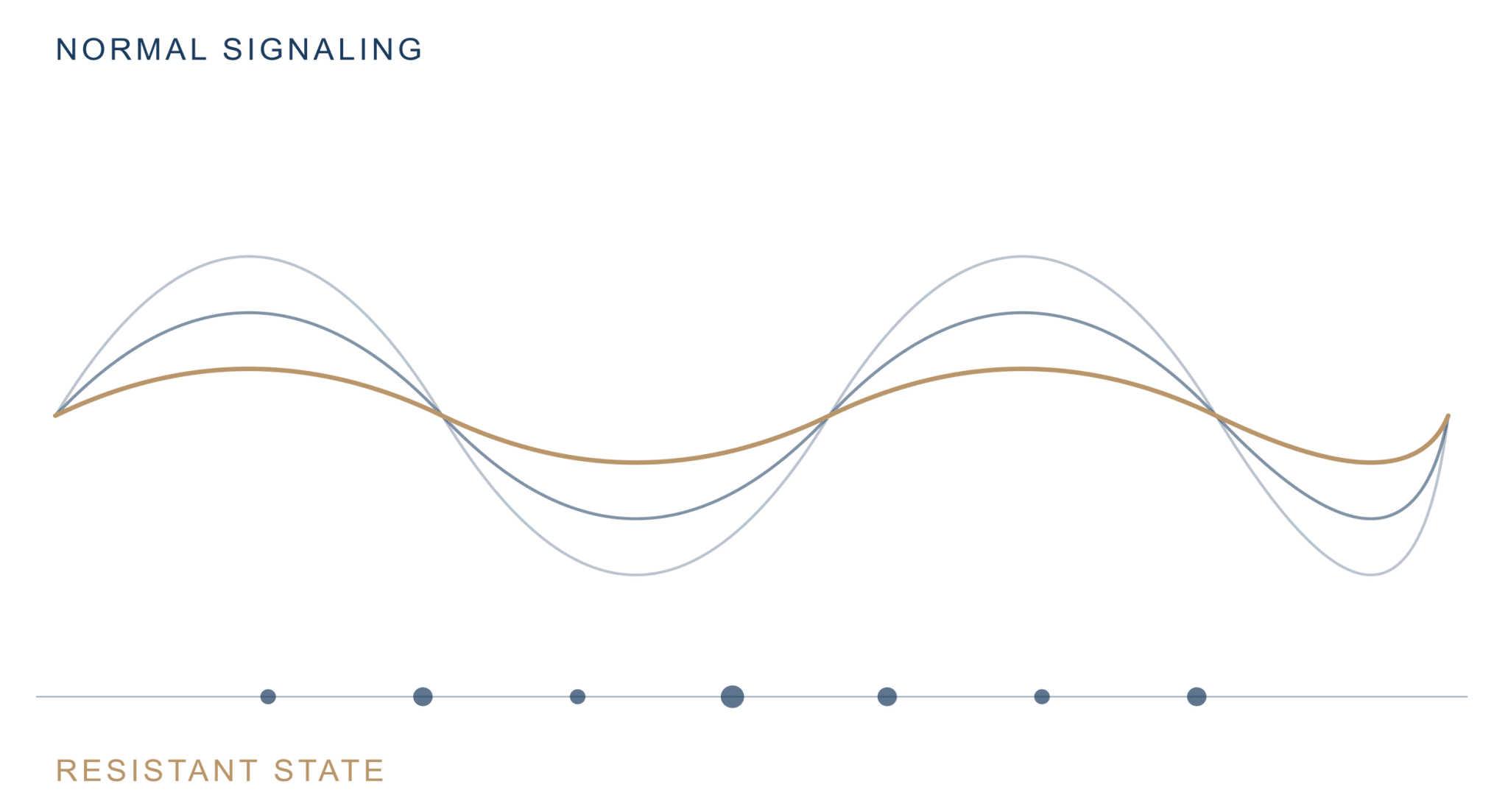
Insulin resistance means the body has trouble using insulin efficiently — so more is produced to get the same effect. Those elevated levels ripple outward into almost every piece of the PCOS picture.
When this happens:
-Insulin levels rise across the day.
-Ovulation becomes less regular.
-Weight gain becomes easier, loss harder.
-Hormone imbalances — including low progesterone — deepen.
Treat the metabolic root, and many of the hormone symptoms soften along with it.
The Inflammation Cycle
A loop that can reinforce itself.
PCOS isn't just one symptom—it's a cycle where each step feeds the next. Here's how that loop unfolds, one step at a time:
Irregular Ovulation — PCOS often means the ovaries don't release an egg every cycle.
Low Progesterone — Without ovulation, the body doesn't produce enough progesterone.
Estrogen, Unopposed — With no progesterone to balance it, estrogen's effects dominate.
Insulin Resistance Amplifies — Metabolic dysfunction deepens the hormonal imbalance further.
Breaking this loop — addressing metabolism and hormones — is what modern PCOS care is trying to do.
Could GLP-1 Medications Help PCOS?
What GLP-1 medications can – and cannot – do
What the science suggests:
-Improve insulin sensitivity, a root driver of PCOS
-Support sustainable weight loss when that’s a goal
-Help restore more regular cycles over time
-Reduce metabolic inflammation indirectly
What the science suggests:
-Improve insulin sensitivity, a root driver of PCOS
-Support sustainable weight loss when that’s a goal
-Help restore more regular cycles over time
-Reduce metabolic inflammation indirectly
What the science does not yet show:
-Not a direct “hormone fix”
-Not a replacement for progesterone when it’s low
-Not a standalone treatment for PCOS
-Not a substitute for lifestyle foundations
What the science does not yet show:
-Not a direct “hormone fix”
-Not a replacement for progesterone when it’s low
-Not a standalone treatment for PCOS
-Not a substitute for lifestyle foundations
GLP-1 receptor agonists, including semaglutide and tirzepatide, are FDA-approved for specific metabolic indications. Use outside those indications is off-label and should only be considered in consultation with a qualified clinician. These medications require a prescription, may cause nausea or digestive symptoms when starting, and work best combined with balanced nutrition, sleep, stress management, and resistance training. This content is educational and not a substitute for individual medical advice.
Do GLP-1 Analogs Have a Place in the Treatment of PCOS? New Insights and Promising Therapies
The efficacy and safety of GLP-1 agonists in PCOS women living with obesity in promoting weight loss and hormonal regulation: A meta-analysis of randomized controlled trials
Why Progesterone Matters
Progesterone is a balancing hormone. When ovulation is irregular — as it often is in PCOS — progesterone stays low, and the symptoms of estrogen dominance move in.
What low progesterone can lead to:
-Irregular or heavy periods
-Estrogen dominance symptoms
-Poor sleep
-Mood changes and anxiety
What low progesterone can lead to:
-Irregular or heavy periods
-Estrogen dominance symptoms
-Poor sleep
-Mood changes and anxiety
How progesterone therapy helps:
Balances the effects of estrogen, regulates cycles, protects the uterine lining, and — for many patients — improves sleep and mood. Common forms include oral progesterone capsules and cyclical therapy taken part of the month, always prescribed and monitored.
How progesterone therapy helps:
Balances the effects of estrogen, regulates cycles, protects the uterine lining, and — for many patients — improves sleep and mood. Common forms include oral progesterone capsules and cyclical therapy taken part of the month, always prescribed and monitored.
GLP-1 receptor agonists, including semaglutide and tirzepatide, are FDA-approved for specific metabolic indications. Use outside those indications is off-label and should only be considered in consultation with a qualified clinician.
Treat the Root, Not the Symptom
How GLP-1 Medications May Help
GLP-1 receptor agonists like semaglutide and tirzepatide were first developed for type 2 diabetes and later used for weight management, but they're now becoming a valuable tool in PCOS care. The reason is simple: they target the metabolic layer that drives so many of the downstream hormone issues women with PCOS experience. First, they help you feel full longer by slowing gastric emptying and quieting appetite signals, which makes a sustainable calorie deficit easier to maintain. Second, they improve blood sugar and insulin sensitivity—especially meaningful since insulin resistance is so common with PCOS. Third, while they don't "fix hormones" directly, correcting that underlying metabolic dysfunction can lead to more regular cycles and less severe symptoms over time. Think of it as addressing the root cause rather than chasing each symptom on its own. If you're curious whether a GLP-1 approach fits your needs, our team is here to help you explore your options.
Book your Appointment
Treat the Root, Not the Symptom
Feel Like Yourself Again
Feel Like Yourself Again
How GLP-1 Medications Work
GLP-1 receptor agonists like semaglutide and tirzepatide work by mimicking a hormone your body already makes, which is part of why they fit so naturally into PCOS care. By improving insulin sensitivity and supporting healthy blood sugar regulation, they address the metabolic dysfunction that drives many PCOS symptoms—and, in certain contexts, may even help reduce inflammation. They also help regulate appetite and metabolism, making it easier to feel full and maintain steady, sustainable progress. It's worth bringing a few signals into the clinic, including irregular or absent periods, signs of hormone imbalance that disrupt daily life, difficulty losing weight despite consistent effort, or concerns about fertility now or in the future. Depending on what we find, your provider may recommend hormone testing across your cycle, blood sugar and insulin labs, ultrasound imaging in some cases, or a trial of GLP-1 or progesterone when clinically appropriate. Above all, your treatment should always be tailored to your individual labs, goals, and season of life—not a template.
book your appointment now
Hormones and metabolism,
addressed together
SUPPORT YOUR METABOLISM
-GLP-1 medications when clinically appropriate
-Balanced meals — protein, fiber, healthy fats
-Consistent physical activity
-Blood sugar & insulin labs to track progress
BALANCE YOUR HORMONES
-Progesterone therapy where indicated
-Restore ovulation when possible or desired
-Hormone testing, repeated over time
-Adjust the plan to your phase of life
BUILD THE FOUNDATION
-Prioritize sleep and recovery
-Manage stress actively, not passively
-Reduce highly processed foods
-Resistance training twice a week
Contact Us for an Appointment
